
 By admin
Guidelines on E-Cigarette Use:
The American College of Cardiology and American Heart Association advise against e-cigarettes for smoking cessation¹. The primary concern remains addiction to these devices. However, their limited role applies only to patients who are unwilling to quit or to those in whom standard smoking-cessation therapies have failed—and even then, use should not exceed beyond 12 weeks.
What Are E-Cigarettes?
They are called electronic nicotine delivery systems, e-cigarettes heat a liquid containing nicotine to create a vapor. Unlike traditional cigarettes, they involve no combustion or smoke production. Inhaling this vapor is known as vaping.
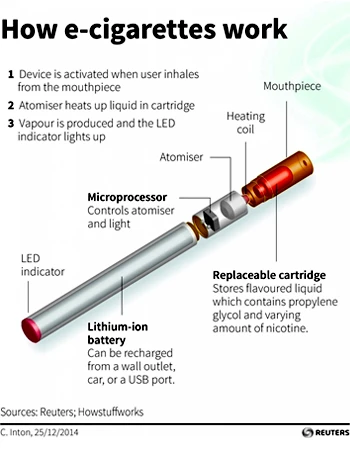
Disclaimer: E-cigarettes lack legal approval in India.
Market varieties include cig-a-likes, vape pens, regulated/mechanical mods, and pod systems.
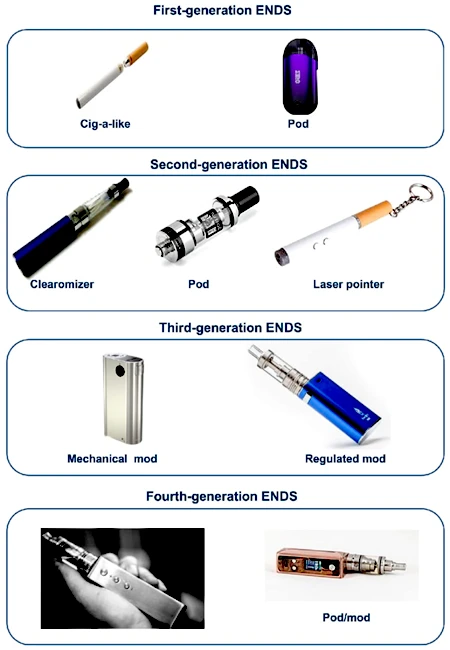
Lung Risks from E-Cigarettes:
EVALI: A Serious Threat
EVALI stands for e-cigarette or vaping product use-associated lung injury. Vitamin E acetate emerges as the key offender.
Symptoms often start with cough and shortness of breath, progressing to respiratory failure or even ARDS-like illness in severe cases.
Diagnostic clues feature elevated CRP and white cell counts, alongside HRCT chest scans revealing bilateral ground-glass opacities. Bronchoalveolar lavage may disclose neutrophilia and lipid-laden macrophages, confirmed with oil red O or Sudan black stains. Lung biopsies sometimes show diffuse alveolar damage, hemorrhage, or eosinophilic pneumonia.
Treatment centers on oxygen support, high-flow nasal cannula or noninvasive ventilation, and mechanical ventilation for critical cases.
Key Risk Factors:
Device type
Coil temperature
E-liquid content
Pre-vaping heating (dapping)
Subtle techniques like stealth vaping, zero vaping, or Valsalva maneuvers during use.
Despite claims of harm reduction, e‑cigarettes—used increasingly by youngsters who think they’re harmless and by smokers who believe switching to e-cigarettes a safer option—offer uncertain quitting benefits and pose real risks of serious lung injury.
References:
American Heart Association policy statement (PubMed): https://pubmed.ncbi.nlm.nih.gov/25156991
https://www.researchgate.net/figure/Different-types-of-e-cigarettes-from-the-first-to-fourth-generation_fig1_373404683
https://dics.co/current-affairs/e-cigarettes-upsc
Dr Moid Mir Siddiq Ali
Assistant Professor
Department of Respiratory Medicine
Dr Asfa Durdana
Senior Resident
Department of Respiratory Medicine
Deccan College of Medical Sciences
Leave A Comment