
 By admin
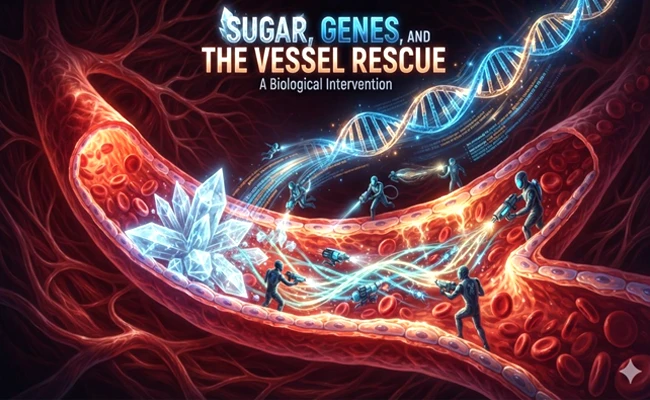
For millions of individuals living with Type 2 Diabetes, the damage caused by chronic high blood sugar isn’t just a metric on a lab report—it is a quiet, microscopic assault on the cardiovascular system. At the center of this battle is the endothelial lining, a single layer of cells that acts as the protective inner shield for every blood vessel in the human body.
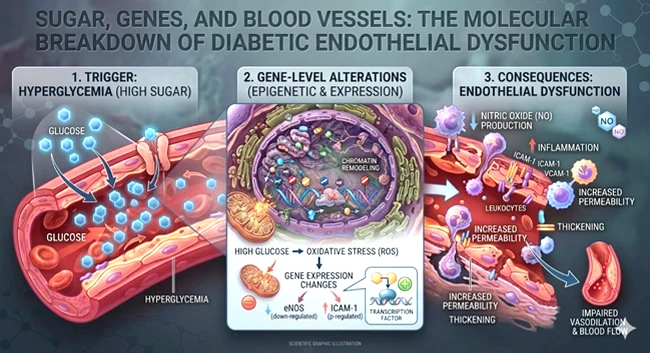
High blood sugar (hyperglycemia) leads to diabetic endothelial dysfunction by altering gene expression and damaging blood vessels. Excess glucose creates free radicals that destroy nitric oxide, causing inflammation and scarring, ultimately leading to stiff and sticky blood vessels.
When diabetes takes hold, this crucial shield breaks down. However, breakthrough therapies like Semaglutide (a GLP-1 receptor agonist) are rewriting this molecular script.
Semaglutide, a GLP-1 receptor agonist, helps manage type 2 diabetes, promote weight loss, and lower heart risks. It works by releasing insulin, slowing digestion, and reducing appetite.
Let’s step inside the cell to look at the remarkable “Before and After” transformation that occurs at the intersection of sugar, genetics, and vascular health.
The Baseline: The Diabetic Blood Vessel (Before Treatment)
Without intervention, chronic hyperglycemia triggers a destructive three-step domino effect within the endothelial cell:
1. Trigger: Hyperglycemia (High Sugar)- The Sugar Flood
- Glucose Overload: Excessive glucose molecules flood the bloodstream and cross into the vessel wall.
- Mitochondrial Stress: This massive influx forces the mitochondria to generate destructive levels of Reactive Oxygen Species (ROS) or oxidative stress.
2. Gene-Level Alterations (Epigenetic & Expression)- The Genetic Sabotage
- Chromatin Remodeling: The high oxidative stress alters the physical landscape of the cell’s DNA inside the nucleus.
- Altered Transcription: Essential protective genes, such as eNOS (responsible for blood vessel relaxation), are down-regulated, while pro-inflammatory genes like ICAM-1 are heavily up-regulated.
3. Consequences: Endothelial Dysfunction- The Vascular Breakdown
- Nitric Oxide Loss: Dysfunctional eNOS leads to a sudden drop in Nitric Oxide (NO) production.
- Inflammation & Sticky Vessels: Up-regulated adhesion proteins (ICAM-1, VCAM-1) make the vessel walls highly sticky, attracting white blood cells (Leukocytes).
- Vessel Failure: The cellular lining becomes thick, hyper-permeable, and inflamed, ultimately leading to impaired vasodilation and restricted blood flow.
The Molecular Pivot: The Semaglutide Transformation (After Treatment)
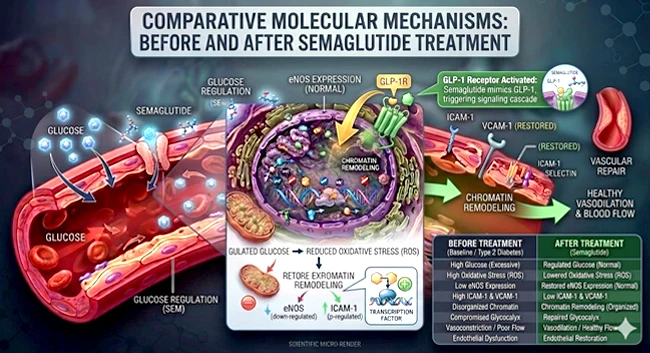
When Semaglutide enters the equation, it binds directly to GLP-1 Receptors on the endothelial cell wall. This single connection triggers a rapid cellular rescue mission, reversing the damage at the genetic level:
1. Reversing the Sugar Overload (Euglycemia)
Semaglutide stabilizes systemic blood sugar, immediately cutting off the toxic influx of glucose into the vessel’s lining. With the fuel supply regulated, mitochondrial stress drops, and the destructive production of ROS free radicals is neutralized.
2. Recruiting Protective Genes (Transcription Factors)
Instead of allowing sugar to dictate genetic expression, Semaglutide activates a cascade of defensive transcription factors inside the cell nucleus:
- CREB Activation: Turns the eNOS gene back on, restoring the cell’s ability to produce Nitric Oxide.
- Nrf2 Activation: Floods the cell with antioxidant enzymes to clear away any remaining oxidative stress.
- NF-κB Suppression: Aggressively shuts down the inflammatory signaling pathway.
3. Restoring Vascular Integrity
With the genes reprogrammed, the vessel transitions from a state of disease back to homeostasis:
- Natural Vasodilation: Restored Nitric Oxide levels allow the vessel walls to relax, lowering blood pressure and optimizing blood flow.
- Resolved Inflammation: The “sticky” adhesion molecules (ICAM-1 and VCAM-1) disappear from the cell surface. White blood cells can no longer latch on, bringing a halt to chronic vascular swelling.
- Structural Repair: The vessel lining repairs its protective barrier, normalizing permeability and reversing tissue thickening.
Moving From Dysfunction to Homeostasis
The journey of diabetic endothelial dysfunction highlights just how dynamic our vascular system truly is. Diabetes may attempt to rewire our genetic expression to damage our blood vessels, but targeted molecular therapies like Semaglutide demonstrate that this damage isn’t a one-way street.
By stepping in to regulate glucose, clear out oxidative stress, and fundamentally flip the genetic switches back to a protective state, modern medicine is actively transforming stiff, inflamed vessels back into healthy, flexible pathways.
References:
1. https://www.mdpi.com/2076-3271/13/3/87
2. https://www.nature.com/articles/s41392-025-02401-w
3. https://www.frontiersin.org/journals/medicine/articles/10.3389/fmed.2025.1669685/full
4. https://pmc.ncbi.nlm.nih.gov/articles/PMC11674233/
5. https://iv.iiarjournals.org/content/40/1/600
By
Name: Dr S Adeeb Mujtaba Ali
Designation: Research Officer (In-charge)
DGI: Salar-E-Millat Research Centre
Leave A Comment