
 By admin
“A polymath who was truly centuries ahead of his time Ibn Sina”
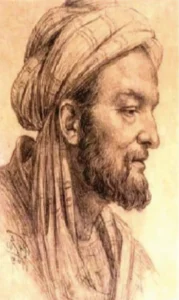
Image Source: https://myhero.com/A_Sina_LC_qhs_QA_2010_ul
Ibn Sina (980–1037 CE), also known as Avicenna, was a Persian polymath whose visionary insights into medicine, philosophy, and science were centuries ahead of his time. Often called the ‘Father of Early Modern Medicine,’ his work bridged ancient Greek knowledge and modern scientific practices. His legacy includes groundbreaking contributions that predate Western discoveries hundreds of years.
Introduction to Ibn Sina: The Prince of Physicians
In a land where science and wisdom flourished, a brilliant mind emerged — Abu Ali al-Husayn ibn Abd Allah ibn Sina, known in the West as Avicenna. Born in 980 CE in present-day Uzbekistan, he embarked on a journey of knowledge at a young age. By sixteen, he had become a practicing physician. His insatiable curiosity led him to explore various fields, including medicine, philosophy, astronomy, and mathematics. His magnum opus,” The Canon of Medicine” became a cornerstone of medical knowledge for centuries.
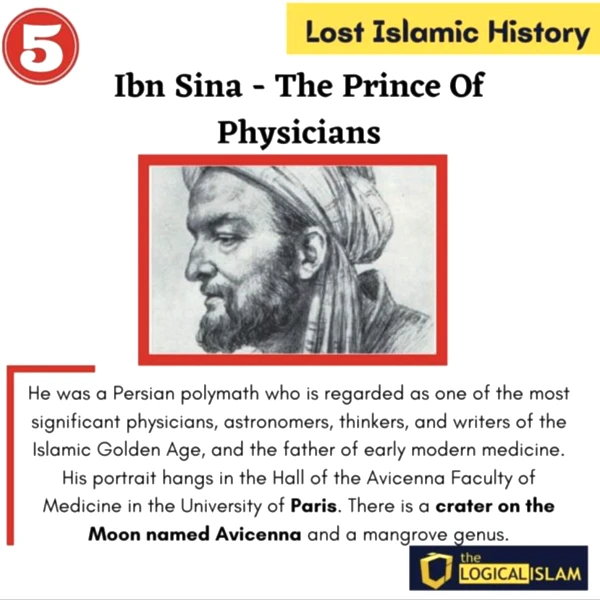
Image Source: https://www.facebook.com/photo/?fbid=1826196507536905&set=a.1823139404509282
Early Life and Education
Born in 980 AD in Afshana, near Bukhara, Ibn Sina, also known as Avicenna, displayed exceptional talent from a young age. His father, a respected scholar, provided him with the best education. By age ten, he had memorized the Quran. He explored various sciences, including mathematics, philosophy, and medicine. At sixteen, he began his medical studies. By eighteen, he gained prominence by curing the Sultan of Bukhara’s illness. His intellect and dedication laid the
foundation for his future achievements.
Pioneering Medical Science
The Canon of Medicine, a 14-volume encyclopedia, systematized medical knowledge and became the standard textbook in Europe and the Islamic world for over 600 years. One of the most important themes in The Canon of Medicine is the idea of conducting experiments to assess a treatment’s effectiveness. Ibn Sina outlined seven conditions for an accurate drug effect measurement: purity, proper chemical storage, testing on participants with a single ailment (first known use of exclusion criteria), multiple patient groups (building on Al-Razi’s control group), the dose-response effect (strength of the drug should match the severity of the diseases), long-term experiments with many patients, and prioritizing human trials over animal trials. These values significantly influenced modern clinical trials, as seen in the widespread transmission of Islamic knowledge through the Latin translation of The Canon of Medicine, known as The Medical Poem,
during the Middle Ages.
Over 800 years before the formal germ theory of disease, Ibn Sina identified that soil and water could spread illness. He accurately described contagious diseases and introduced the concept of quarantine, and advocated for the isolation of patients, a 40-day quarantine period called al Arba’iniya, to prevent epidemics.
He made significant contributions to anatomy and surgery. He accurately described the human eye’s anatomy and the optic nerve’s function. His surgical insights included advanced procedures like cataract surgery, tracheostomies, and nerve repair.
Ibn Sina, a pioneer in holistic and psychosomatic medicine, argued that mental health directly affects physical health. He documented psychological disorders like depression and anxiety and treated patients with a holistic approach that included medication, diet, and physical therapy. In his book, Al- Shifa, Ibn Sina explored the link between the body and mind. He identified ten senses, five internal and five external. He introduced the concept of the sensus communis, now known as executive function, which is the mind’s ability to process sensory and perceptual information. Ibn Sina considered imagination, intelligence, and instinct as psychological qualities. He believed that our knowledge of the world shapes our intelligence and intuition, influencing our experiences. Early Muslim psychologists called psychology Ilm-al Nafsiat, meaning ‘self-knowledge,’ highlighting the intrinsic connection between psychology and philosophy in ancient thought. His famous “Floating Man” thought experiment argued that the self exists independently of the body, predating René Descartes’ “I think, therefore I am” by about 600 years. He was also a pioneer in psychophysiology, linking physical health directly to mental states and describing conditions like meningitis and diabetes long before modern diagnostic tools. He improved the study of the pulse, suggesting it could reveal specific internal body conditions. His detailed descriptions of pulse characteristics and arrhythmias are still essential for modern cardiology diagnostics.
He recognized most kidney and bladder diseases in the systemic classification of renal diseases and Ibn Sina’s accounts of bladder diseases in al-Qanun. He was also the first to suggest that haematuria could be caused by non-urinary factors, such as blood diseases. In his chapter on urinary disturbances, Ibn Sina described the etiological factors and signs of various urinary problems and highlighted the role of psychological factors in treating nocturnal enuresis. Both Ibn Sina and al-Razi warned against catheterization during inflammation, as it exacerbated swelling and pain. To minimize discomfort, Ibn Sina designed catheters with rounded, firm tips and numerous side holes from marine and other animal skin. The al-Hawi, al-Tasrif, and al-Qanun were translated into Latin as early as 1150 CE by Gerard of Cremona and greatly influenced European medical schools until the eighteenth century.
Scientific and Intellectual Mastery
By the age of 18, he claimed to have mastered all the sciences of his time. Beyond medicine, he made significant contributions to astronomy, chemistry, logic, and mathematics. Empiricism was championed by the importance of observation and experimentation. This later became the foundation of the Scientific Revolution. Ibn Sina’s synthesis of Aristotelian philosophy with Islamic theology, coupled with his empirical scientific discoveries, makes him one of history’s
most influential ‘philosopher-scientists’.
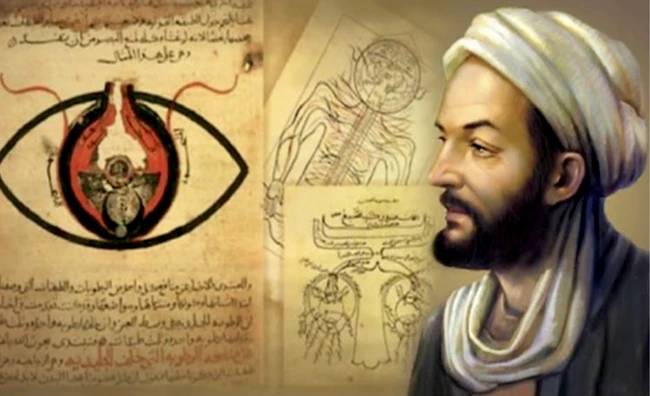
Image Source: https://en.yenisafak.com/turkiye/neglecting-ibn-sina-means-neglecting-ourselves-says-academician-3483800
Ömer Türker, an Islamic philosophy professor at Istanbul’s Marmara University, emphasizes Ibn Sina’s significance, stating,” Ibn Sina is integral to our thinking. Neglecting him is neglecting ourselves.” He highlights Ibn Sina’s role as a key figure in Islamic philosophy and scientific tradition during the era of Islamic scientific dominance.
Turker identifies several unique contributions of Ibn Sina to history of thought. He was a leading figure in metaphysics and medicine in the classical world. He also made significant contributions to logic, theoretical physics, mathematics, musical theory, ethics, practical philosophy, psychology, astronomy, and medicine.
Turker asserts that Ibn Sina completed the great tradition of philosophy and science that emerged from the Hellenistic period, a millennium before his birth. He emphasizes Ibn Sina’s importance not only for Islamic civilization but also for the history of humanity and thought. Turker emphasized that scientific study independent of Ibn Sina’s theories was impossible in his time. He regarded Ibn Sina as a significant thinker who contributed to human history.
Turker highlighted the importance of Ibn Sina’s works, including Kitab al-Shifa (The Book of Healing), Al-isharat wa al-tanbihat (Remarks and Admonitions), and Kitab al-Najat (The Book of Salvation). Kitab al-Shifa, covering logic, physics, mathematics, and metaphysics, influenced subsequent studies of philosophy and science. Al-isharat wa al-tanbihat became the foundation of Islamic philosophy.
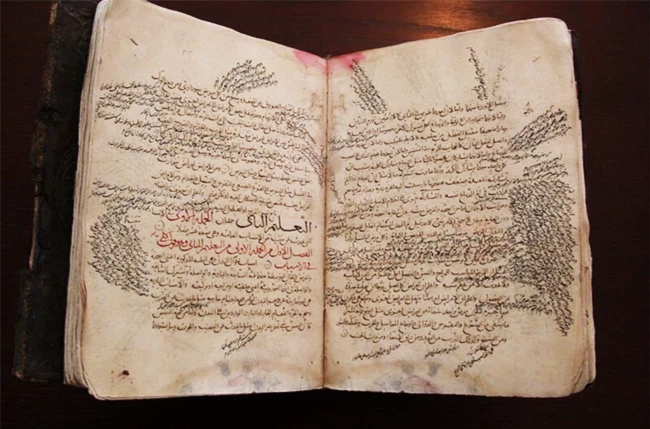
Image source: https://www.1001inventions.com/ibnsina/
After Ibn Sina’s death, his works shaped Islamic philosophy and were quickly translated into Latin, reaching the Western world. The Western world studied classical thought and science through Ibn Sina’s works until the 18th century.
Turker argued that Ibn Sina represents the scientific and philosophical knowledge of the classical world. He believed the history of philosophy should be divided into before and after Ibn Sina. He criticized Western writers for downplaying his importance to emphasize ancient Greek in rewriting and reshaping the history of philosophy.
Turker emphasized Ibn Sina’s significance for modern science and philosophy, stating that the development of thought cannot be analyzed without considering him. He also asserted that Ibn Sina’s theories offer opportunities for Muslims to develop their own philosophical thought systems and address common human problems.
The Editorial Note: Extracted from the article “Beauty, Hair and Body Care in the Canon of Ibn Sina” written by Nil Sari on 17th June 2005
Digestion, or the ‘attractive force’ (quvva-i câzibe), may be inefficient. These forces weaken due to corrupted humour (mizac). Typically, the ‘cold’ humour (mizac-i barid) causes weakness. Extreme inactivity (kasrat-i sukûn) causes the ‘attractive force’ to become unresponsive and dormant. This condition is more common in those who activate their ‘attractive force’ with exercise (sports). If such people remain in moderate inactivity, the ‘attraction of food’ by the
‘attractive force’ weakens, regardless of the food they eat.
Excessive dissolution of food (kesret-i tahallul): The food reaches the organs as intended, but dissolves too much upon arrival. (This is like catabolism and metabolic reactions.) Emaciation can result from heavy sports, anxiety, worries, and consuming diseases.
Ibn Sina, acknowledging the historical preference for being overweight, observed the harmful effects of obesity. Unlike normal weight, obesity is detrimental. People don’t take it seriously unless they’re affected. However, one should protect themselves from excessive obesity. Even if they don’t seem obese or harm themselves, their health may unexpectedly fail. Ibn Sina advises losing weight through diets, bathing, and intensive sports. After achieving this, methods for toning organs like arms and legs are discussed.
Extract from “Sphygmology of Ibn Sina, a Message for Future” by M.M. Zarshenas, Z. Abolhassanzadeh, P. Faridi, A. Mohagheghzadeh
Ibn Sina observed that various physiological conditions influence pulse parameters. When the stomach is full, the pulse is large, rapid, and frequent. Physical exercise alters the pulse. During pregnancy, the pulse is larger than in other periods but still rapid, frequent, and large. As pregnancy progresses, especially towards labour, the pulse becomes thin, weak, rapid, and frequent. Inflammation causes a saw-like pulse. Anger causes a large, tall, rapid, and frequent pulse, while distress causes a thin, weak, slow, and different pulse.
His legacy offers several core messages for today’s generation:
The works of Ibn Sina (Avicenna) offer a powerful message to Gen Z on holistic well-being, knowledge integration, and mindful living. They encourage a balanced approach to the digital age, urging youth to connect mental and physical health and maintain deep, critical thinking rather than relying solely on algorithms.
– Holistic Mind-Body Health: Ibn Sina’s work emphasised that mental health directly impacts physical well-being, teaching Gen Z the importance of treating the mind and body as interconnected.
– Deep Thinking Over Shallow Information: In an era of instant search engines and AI, Ibn Sina’s synthesis of diverse disciplines reminds us that true wisdom comes from deep understanding, not just skimming data.
– Resilience and Relentless Curiosity: Despite political turmoil and imprisonment, Ibn Sina continued writing, researching, and teaching, demonstrating perseverance and lifelong learning.
– Ethical Use of Knowledge: His works emphasise the importance of pairing science, reason, and education with moral reasoning and ethics, providing a timeless framework for navigating ethical dilemmas in new technologies.
His revolutionary systems of logic and the human soul show how ancient wisdom applies to modern challenges.
References:
1. Internet.
2. Wikipedia
3. https://medium.com/@abouzakariae2024/exploring-the-legacy-of-ibn-sina-the-prince-of-physicians-e652e05cbdc1
4. https://www.inspirethemind.org/post/scientists-and-scholars-of-the-islamic-golden-age-ibn-sina
5. https://en.yenisafak.com/turkiye/neglecting-ibn-sina-means-neglecting-ourselves-says-academician-3483800
6. https://muslimheritage.com/ibn-sina-and-sports/
7. https://plato.stanford.edu/entries/ibn-sina/
By,
Name: Dr. S Adeeb Mujtaba Ali
Designation: Research Officer (In-charge)
DGI: Salar-E-Millat Research Centre
Leave A Comment