
 By admin
Learning Objectives:
- Understanding the link between climate change and human health.
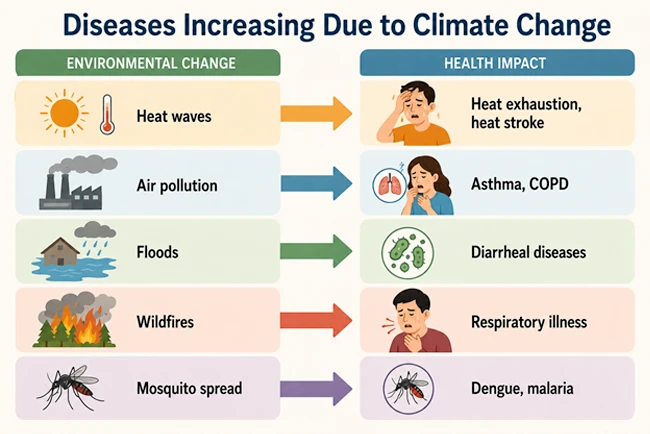
- Recognising diseases worsened by climate change.
- Explaining the role of healthcare professionals.
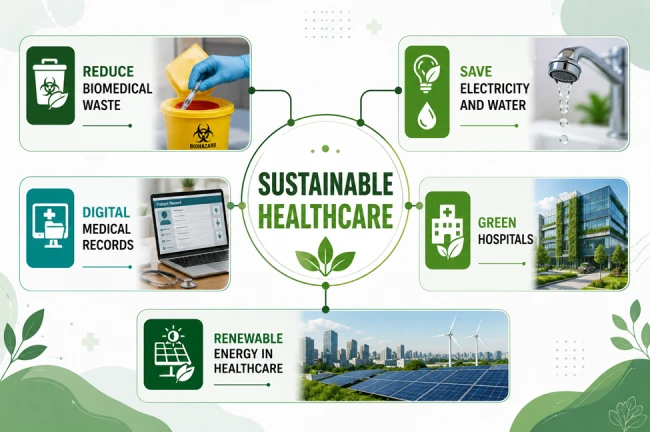
- Discussing sustainable healthcare practices.
Climate change is impacting human lives and health in a variety of ways. It threatens the essential ingredients of good health – clean air, safe drinking water, nutritious food supply and safe shelter – and has the potential to undermine decades of progress in global health.
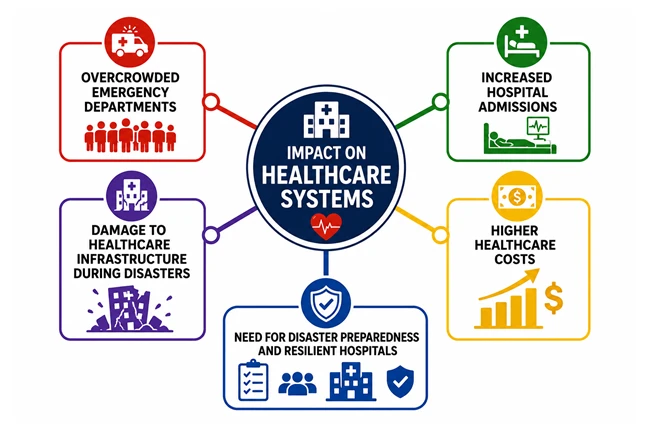
Between 2030 and 2050, climate change is expected to cause approximately 2,50,000 additional deaths per year from malnutrition, malaria, diarrhoea and heat stress alone. The direct damage costs to health are estimated to be between US$ 2-4 billion per year by 2030. Areas with weak health infrastructure – mostly in developing countries – will be the least able to cope without assistance to prepare and respond.
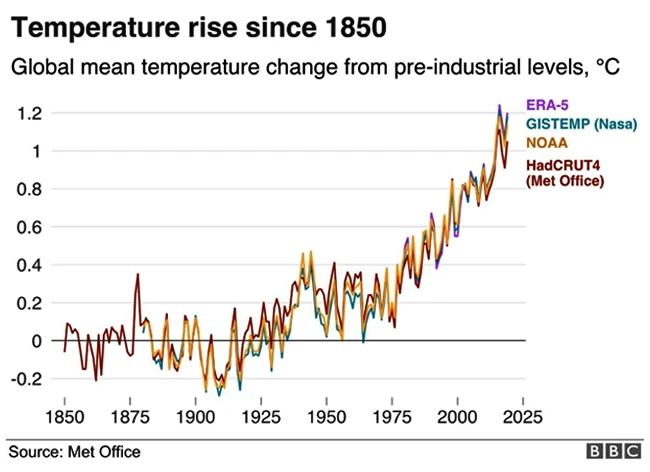
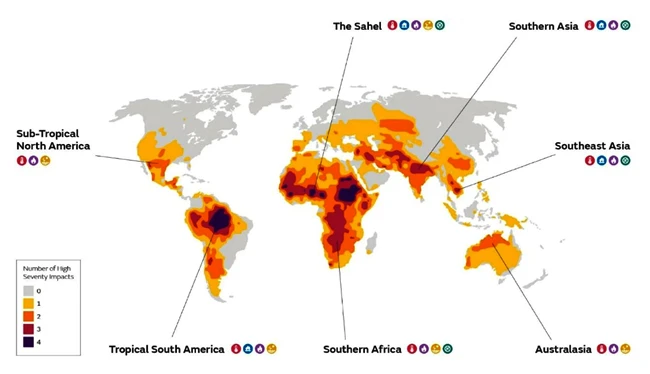
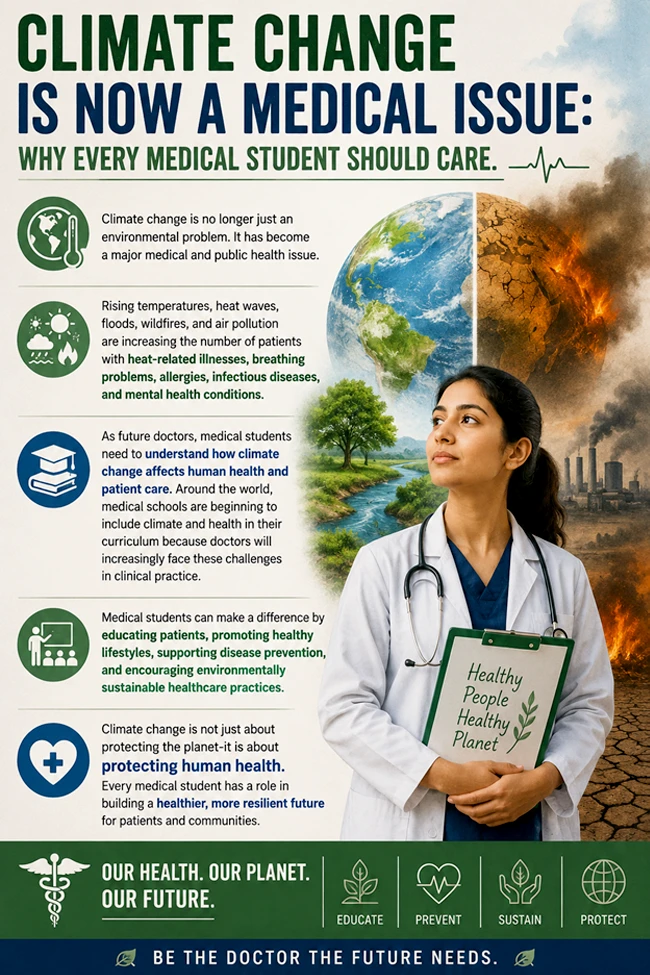
Why Is Climate Change a Medical Issue?
- Climate change affects clean air, safe water, food security, and shelter.
- It increases illness, disability, and mortality worldwide.
- The World Health Organisation (WHO) recognises climate change as one of the greatest threats to global health.
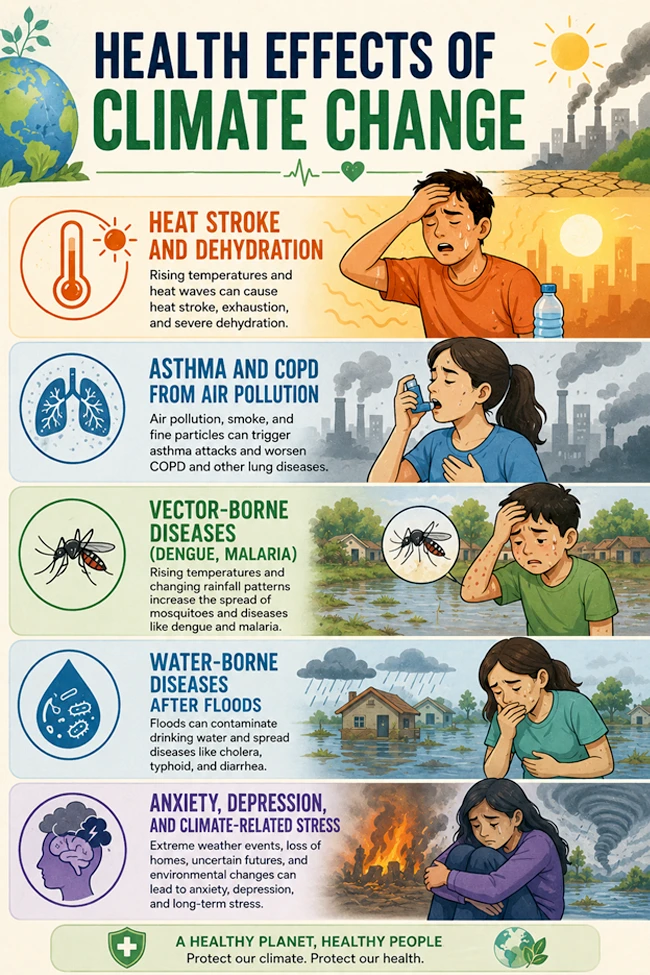
Recent research also shows extreme heat can significantly increase mental health hospital admissions among young people.
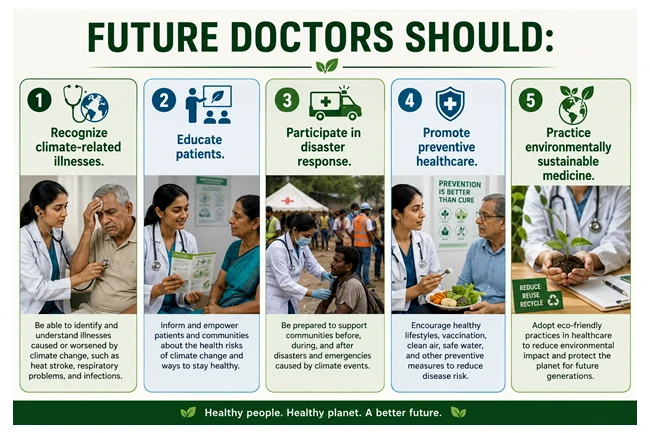
Climate-health education is increasingly being incorporated into medical training internationally.
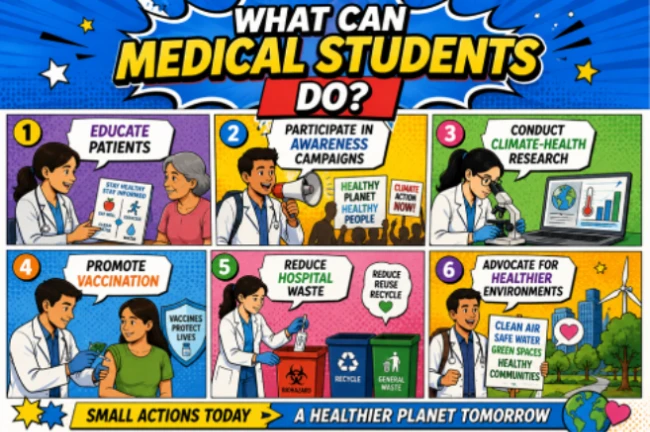
Let us look at a case example- Heat Waves:
A 72 year old man presenting with high fever, confusion and dehydration. The diagnosis is heat stroke and it is managed by immediate cooling, IV fluids and intensive monitoring.
This illustrates how extreme weather directly affects clinical practice.
Take home message:
- Climate change is a health emergency.
- Every medical specialty will be affected by it.
- Prevention is as important as treatment.
- Medical students are future climate-health leaders.
Presentation by: Syeda Ayesha, Associate professor
Department of: Otorhinolaryngology
Leave A Comment