
 By admin
“Always Online!”
-Dr. Syeda Ayesha, Associate professor
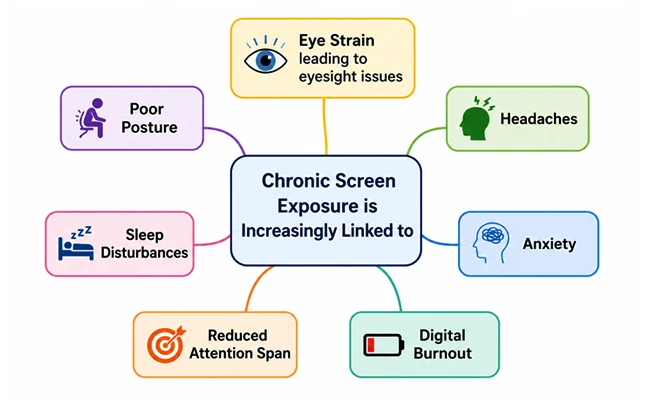
The current generation is widely known as Generation Alpha, but a highly fitting, attractive name for this screen-glued era is “Generation Glass” or “The Tap-and-Swipe Generation.” Generation Alpha medical students are the first learners to grow up in a world illuminated by screens. From online lectures and research articles to clinical resources and social media, much of their academic and personal life revolves around digital devices. While technology has transformed learning, chronic screen exposure is increasingly linked to eye strain leading to eyesight issues, headaches, poor posture, sleep disturbances, anxiety, reduced attention span, and digital burnout.
The solution for the Alpha generation (or the “Tap-and-swipe generation) and Beta generation (the youngest children – born 2025–2039) is limiting the screen time!
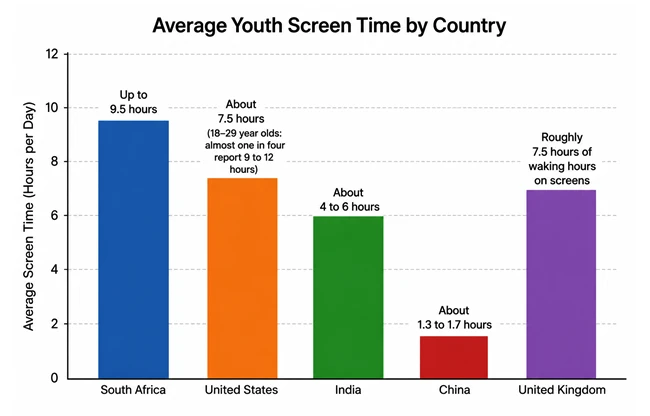
How Much Time is Lost?
When youth spend this much time on screens, it replaces other important, healthy activities. Expert’s measure “lost time” as the difference between how much time is spent on screens versus healthy activities. For example:
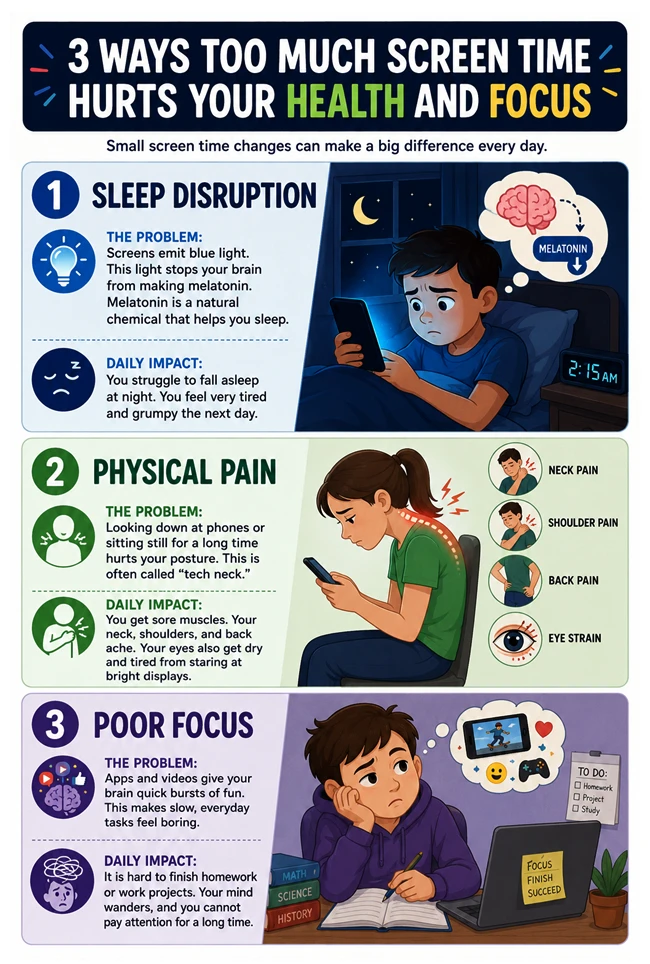
Sleep Loss: Over half of teens spend an hour or more on their phones in bed before sleeping or overnight. This can take away 1 to 2 hours of restorative sleep.
Take home message: A prescription for digital balance
- Avoid checking social media immediately after waking up.
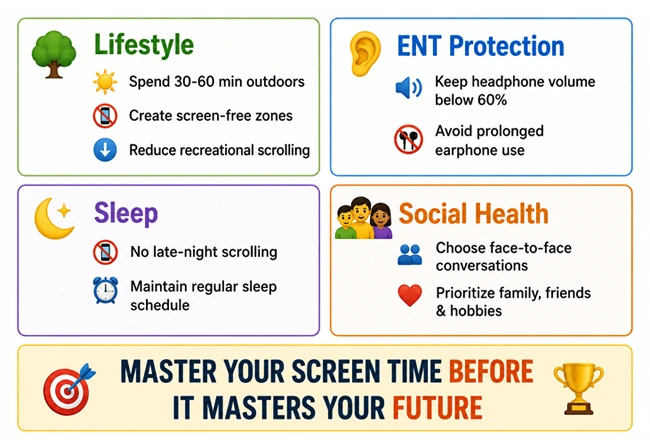
- Follow the 20-20-20 rule and take regular screen breaks during study sessions.
The 20-20-20 RULE is a straightforward approach designed to give your eyes a much-needed break throughout your screen time, helping to avoid visual symptoms like blurry vision and eye strain. Here’s how it works: every 20 minutes, take a pause from your screen and look at something 20 feet away for at least 20 seconds. - Keep your phone away during meals and study breaks to encourage mindful living.
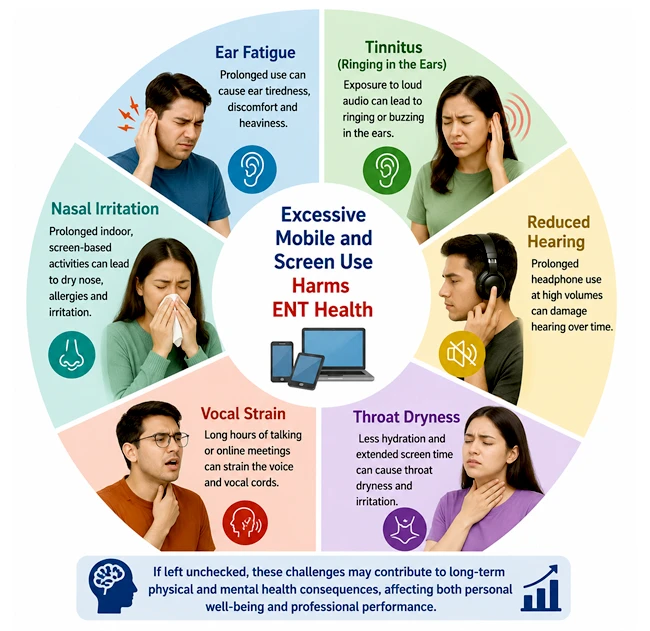
- Stay hydrated to reduce eye strain, fatigue, and throat dryness.
- Sleep on time and avoid late-night scrolling.
- Create screen-free zones and screen-free hours at home.
- Spend at least 30-60 minutes outdoors daily to refresh the mind and body.
- Keep headphone volume below 60% and avoid prolonged earphone use to protect hearing.
- Limit recreational screen time and use devices purposefully by establishing boundaries.
- Follow a structured daily routine that balances study, rest, exercise, and recreation.
- Choose face-to-face conversations whenever possible and do not let digital communication replace human connection.
- Create screen-free zones.
Name: Dr. Syeda Ayesha
Designation: Associate Professor
Department: ENT
DGI: Deccan College of Medical Sciences
Leave A Comment