
 By admin
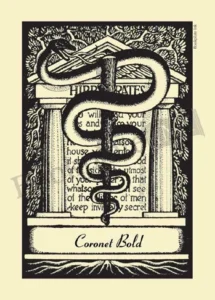 When we first step into medical college, the white coat feels slightly oversized, and the responsibilities ahead seem distant and abstract. But as final year students only a year away from finishing our foundational training, the reality of what lies ahead has started to dawn upon us. Soon, we will stand at our convocation ceremonies and recite the Hippocratic Oath.
An oath written over two millennia ago in ancient Greece, one that helped shape the ethical foundations of medicine. It established that any physician’s primary responsibility is always to the welfare of the patient, regardless of politics, money, or personal gain.
Yet it is easy to view the oath as little more than a ceremonial tradition, a set of words repeated at the threshold of our careers. But behind that tradition lies something far more meaningful. When we speak those words, we tie ourselves to clinicians who chose, again and again, to place human life above self-interest. That shared commitment is what gives our profession its moral weight and earns the trust society places in us.
At the same time, respecting a tradition also means being willing to examine it honestly in the context of the world we practice in today. Modern medicine exists within systems so vast and complex that Hippocrates himself could never have imagined them. Today, “do no harm” has become far more complicated than it once was.
 Young doctors now enter highly bureaucratic healthcare systems where clinical judgment is often intertwined with administrative protocols, resource limitations, documentation requirements, and corporate metrics. Many of these systems exist for good reason. Protocols improve safety, and standardization can save lives. But there are also moments where the realities of the system create tension with the ideals we pledge ourselves to.
Anyone who has spent time in a hospital has seen it. A critically ill patient waiting for a bed while approvals move through layers of administration. Hours spent completing mandatory electronic documentation while patients wait for face-to-face interaction. Junior doctors trying to stay attentive and compassionate near the end of exhausting shifts.
And this is not a problem unique to one institution or one country. It is a reality playing out in hospitals across the world.
Yet acknowledging these problems should not make us cynical. If anything, it highlights why the values behind the oath matter even more today. Modern medicine does not just require scientific competence. It requires humanity, judgment, resilience, and the ability to hold onto empathy within systems that can sometimes make people feel Reduced to checkboxes on a screen.
 For centuries, the image of the physician was that of someone expected to sacrifice endlessly for the profession. But increasingly, the global medical community has begun recognizing the essential fact that patient well-being is deeply
connected to physician well-being. An exhausted, severely sleep-deprived, and burnt out doctor is far more likely to make mistakes. In that sense, caring for physicians is not separate from patient care. It is part of patient care.
This shift in thinking is already reflected in the evolution of our professional pledges. When the World Medical Association revised the Declaration of Geneva, the modern successor to the Hippocratic Oath, physician health and well-being were formally recognized as necessary for providing high-quality care.
That is not a weakening of our duty to patients. It is an acknowledgment that medicine cannot continue burning out its healers while expecting healing itself to endure.
Medicine has also moved away from the paternalism that once defined it. “Doing no harm” no longer means making decisions on behalf of patients simply because we believe we know best. Increasingly, it means working alongside patients, respecting their autonomy, listening to their values, and recognizing their right to make informed decisions about their own care, even when those decisions challenge our clinical instincts.
 In this environment, fulfilling the spirit of the oath requires more than clinical knowledge alone. It also requires advocacy. Learning how to navigate administrative systems, resource limitations, and institutional barriers is now part of protecting our patients’ dignity and ensuring they receive the care they deserve.
Perhaps the Hippocratic Oath is best understood not as a fixed historical artifact, but as a living framework of ethics that continues to evolve alongside medicine itself. These conversations matter because they prepare future doctors for the actual reality of the wards, both the clinical demands and the emotional toll. They also remind those already in the profession that preserving compassion, integrity, and humanity within modern healthcare systems requires conscious effort.
It is about recognizing that to actually deliver on our promise to ‘do no harm,’ we must also become skilled advocates for our patients and active protectors of our own health.
The heart of the oath remains unchanged. Our responsibility is still to heal where we can, relieve suAering where possible, and place the patient’s welfare at the center of what we do. But viewing the oath through a modern lens does not weaken its meaning. It ensures that its principles remain alive, relevant, and capable of guiding medicine through the realities of the world we practice in today.
CONTRIBUTOR: AZLAN MAZHAR MOHAMMAD SHAREEF
DESIGNATION: MBBS STUDENT 2022 BATCH
DGI: DECCAN COLLEGE OF MEDICAL SCIENCES
Leave A Comment